Plantar heel pain that won’t settle down? Here’s where shockwave therapy may fit.
Plantar fasciitis can be frustrating—especially when heel pain lingers for months, flares with walking, or keeps coming back after temporary improvement.
At Wellness Oasis in Barrington, we use shockwave therapy as part of a conservative treatment plan for certain chronic tendon and soft-tissue problems, including some cases of plantar heel pain. It is not the right fit for every patient or every type of heel pain, which is why a proper evaluation comes first.
If you’ve been wondering whether shockwave therapy might be worth considering, here’s what to expect.
What is plantar fasciitis?
Plantar fasciitis is a common cause of heel pain, often felt:
-
with the first steps in the morning
-
after sitting for a while and standing up
-
after longer walks, workouts, or time on your feet
The pain is often related to irritation and overload of the tissues on the bottom of the foot (near the heel), and it can be influenced by factors like activity level, footwear, calf tightness, foot mechanics, and how the tissue is being loaded over time.
Where shockwave therapy may fit in your care plan
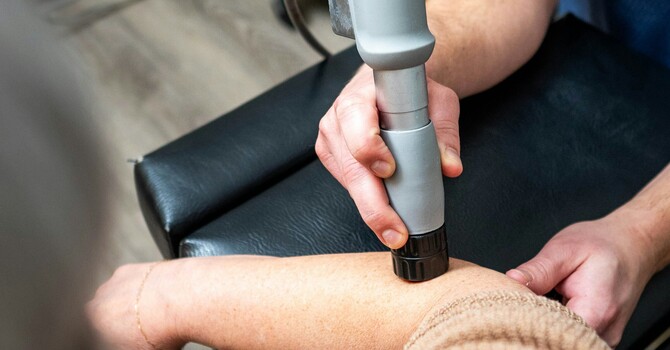
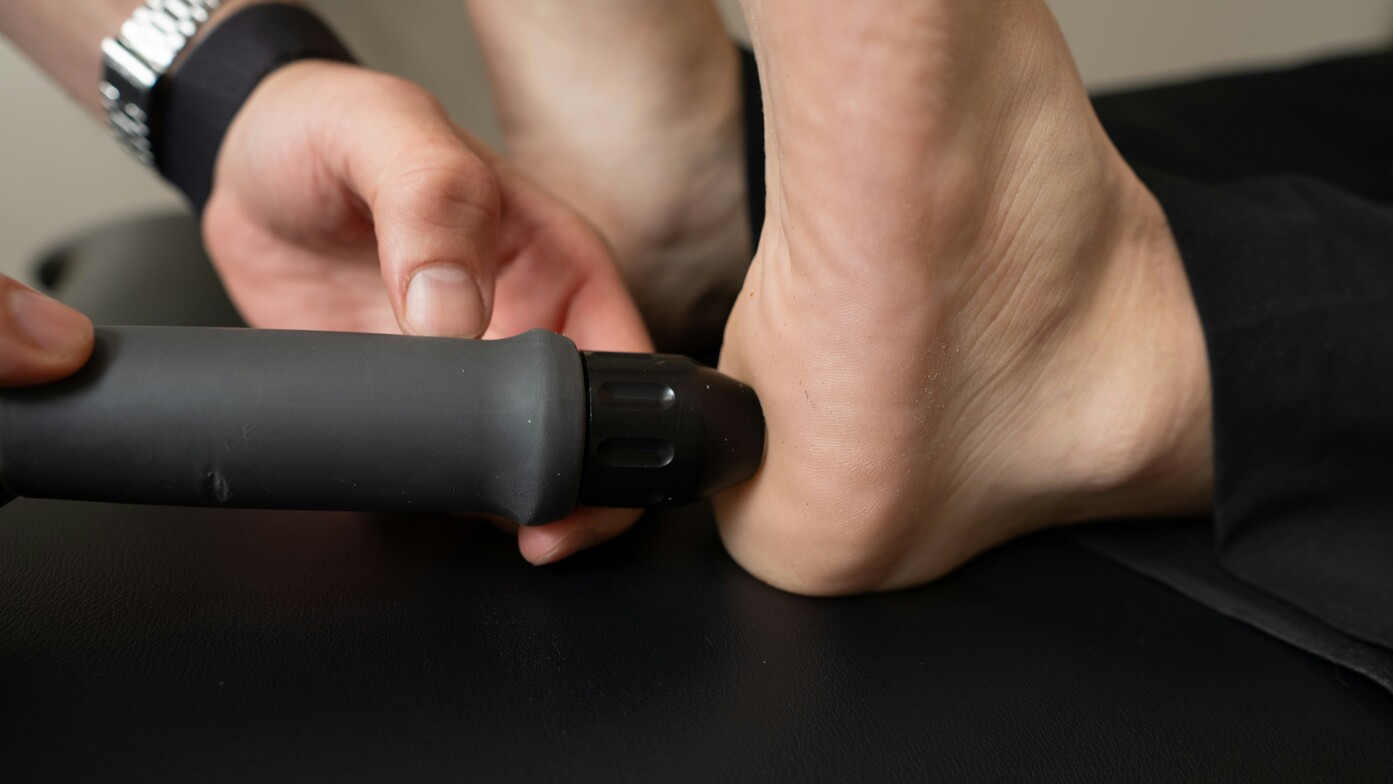
Shockwave therapy uses targeted acoustic energy directed at a focused area of tissue. In musculoskeletal care, it is often considered for chronic soft-tissue pain patterns when symptoms have been stubborn or slow to improve.
At Wellness Oasis, shockwave is typically not used as a stand-alone fix. We usually combine it with other strategies when appropriate, such as:
-
activity modification guidance
-
mobility work
-
manual therapy
-
therapeutic exercises / load progression
-
support for mechanics higher up the chain (ankle, calf, hips, etc.)
This helps us address both the painful area and the contributing factors that may be keeping it irritated.
What to expect during shockwave therapy for plantar heel pain
During the session
Shockwave is applied to a specific area based on your exam findings. Sensation varies from person to person and depends on how irritable the tissue is. Most people describe it as tolerable, though the area can feel sensitive.
Session length
The shockwave portion of the visit is typically brief and is often included as part of a broader treatment plan.
After treatment
Some people notice temporary tenderness or sensitivity in the treated area. Others notice gradual changes in symptoms over time. We’ll review what to expect and what activity modifications may be helpful after treatment.
Who may be a good candidate (and who may need something else first)
Shockwave therapy may be worth discussing if:
-
your heel pain has been persistent or recurring
-
rest/stretching alone has not been enough
-
you want a conservative option as part of a broader plan
-
your symptoms and exam findings suggest a tendon/soft-tissue component
Shockwave may not be the best starting point if your heel pain is being driven by a different issue (for example, a condition that needs a different type of evaluation or treatment approach). That’s why we always assess first.
Common questions about shockwave therapy for plantar fasciitis
Does shockwave therapy hurt?
Sensation varies. Some sensitivity during treatment is common, especially in an irritated area, but most patients tolerate it well. We adjust treatment based on your response.
How many sessions will I need?
It depends on how long the symptoms have been present, how reactive the tissue is, and what’s contributing to the problem. We’ll recommend a plan based on your exam and goals.
Is shockwave therapy a stand-alone treatment?
At Wellness Oasis, shockwave is usually part of a broader care plan, not a stand-alone treatment. We often combine it with other conservative strategies to improve results and reduce recurrence.
Can I keep walking or working out?
That depends on your symptoms and the stage of recovery. We’ll guide you on activity modification and what to avoid (or continue) based on your case.
Is every case of heel pain “plantar fasciitis”?
No. Heel pain can come from different sources. A proper evaluation helps determine whether plantar fascia irritation is the main issue—or whether another condition may be involved.
Why patients choose an integrated approach
Many people with plantar heel pain have tried one thing at a time—stretching, inserts, rest, shoe changes, online exercises—without a clear plan.
An integrated approach helps you understand:
-
what is actually driving your pain
-
which treatments may help
-
what to do between visits
-
how to reduce the chance of it coming right back
That clarity is often just as helpful as the treatment itself.
Ready to find out if shockwave therapy is a fit?
If you’re dealing with stubborn heel pain and want a conservative, structured plan, we’re here to help.
Wellness Oasis
800 S Northwest Hwy, Suite 102A
Barrington, IL 60010
847-277-9355